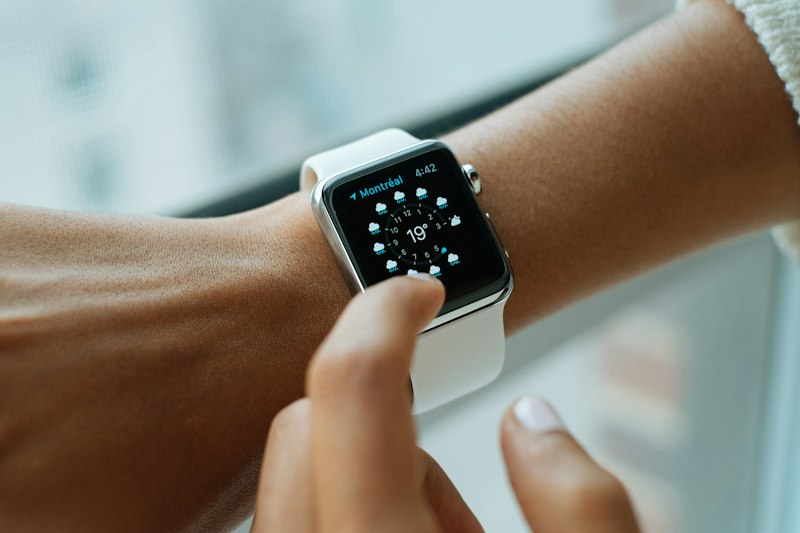
The wearable market is crowded and confusing. Apple Watch, Whoop, and Oura Ring are the three names that keep coming up in every health optimization conversation, but they're built for very different people. Here's how they actually compare.
The Quick Verdict
Before we get into the details:
- Apple Watch is best if you want a smartwatch that also tracks health
- Whoop is best if you're serious about training recovery and strain
- Oura Ring is best if sleep tracking is your top priority
Heart Rate Accuracy
All three use optical heart rate sensors (photoplethysmography), but accuracy varies by placement:
- Apple Watch (wrist): Very accurate at rest, less reliable during high-intensity exercise with lots of wrist movement. Studies show it's within 1-2% of a chest strap at rest.
- Whoop (wrist/bicep): Similar wrist accuracy to Apple Watch, but the optional bicep band is significantly more accurate during exercise.
- Oura Ring (finger): Finger-based tracking is actually more accurate than wrist for resting heart rate and HRV. The arteries in your finger are closer to the surface. Less useful during exercise.
Sleep Tracking
This is where the differences get real.
Oura Ring
Oura is the gold standard for consumer sleep tracking. Independent studies show it agrees with polysomnography (the clinical gold standard) about 79% of the time for sleep staging. It tracks:
- Total sleep time
- Sleep efficiency
- REM, deep, and light sleep stages
- Sleep latency (how long it takes to fall asleep)
- Nighttime heart rate, HRV, and body temperature
- Blood oxygen (SpO2)
Whoop
Whoop's sleep tracking is solid, with a "sleep coach" that tells you how much sleep you need based on your strain and recovery. It tracks similar metrics to Oura but with slightly less accuracy on sleep staging. The strap can be uncomfortable for side sleepers.
Apple Watch
Apple Watch sleep tracking improved significantly with watchOS 9+, but it's still behind Oura and Whoop. The biggest issue: you need to charge it daily, so wearing it overnight means you're managing charging windows. Many users find it uncomfortable to sleep in.
Recovery and Readiness Scores
Whoop Recovery
Whoop pioneered the daily recovery score. It factors in HRV, resting heart rate, respiratory rate, and sleep performance to give you a 0-100% score. Green means go hard, yellow means moderate, red means take it easy.
This is genuinely useful. Athletes and serious trainers report that following Whoop's recovery guidance reduces overtraining and injuries.
Oura Readiness
Oura's readiness score works similarly but weights sleep more heavily. It also factors in body temperature trends, which can flag illness 1-2 days before symptoms appear. During COVID, several studies validated Oura's ability to detect infection early through temperature changes.
Apple Watch
Apple doesn't have a single readiness score. You get individual metrics (HRV, cardio fitness, sleep data) but it's up to you to interpret them. Third-party apps like Athlytic can create a recovery score from Apple Watch data.
Battery Life
This matters more than people think:
- Oura Ring: 5-7 days. Charges in about 60-80 minutes.
- Whoop: 4-5 days. Has a slide-on battery pack so you can charge without removing it.
- Apple Watch: 18-36 hours depending on model and usage. This is its biggest weakness for health tracking.
The Cost Factor
- Apple Watch SE: $249 one-time purchase
- Apple Watch Ultra 2: $799 one-time purchase
- Oura Ring Gen 3: $299-$549 + $5.99/month subscription
- Whoop: Free device + $30/month subscription (or $239/year)
Who Should Buy What
Buy Apple Watch if:
- You want notifications, apps, calls, and music on your wrist
- Health tracking is a nice-to-have, not the primary purpose
- You're already in the Apple ecosystem
Buy Whoop if:
- You train 4+ times per week and want recovery guidance
- You don't want another screen on your wrist
- Strain tracking and training optimization are your priorities
Buy Oura Ring if:
- Sleep is your number one focus
- You want something invisible and comfortable 24/7
- You prefer a discrete form factor over a wrist device
"The best wearable is the one you'll actually wear consistently. A $300 ring collecting dust on your nightstand gives you zero data."
Can You Wear Multiple?
Plenty of people combine Oura + Apple Watch or Oura + Whoop. The ring handles sleep and readiness while the wrist device handles daytime activity and workouts. It's overkill for most people, but if you're deep into optimization, the data stacks nicely.